
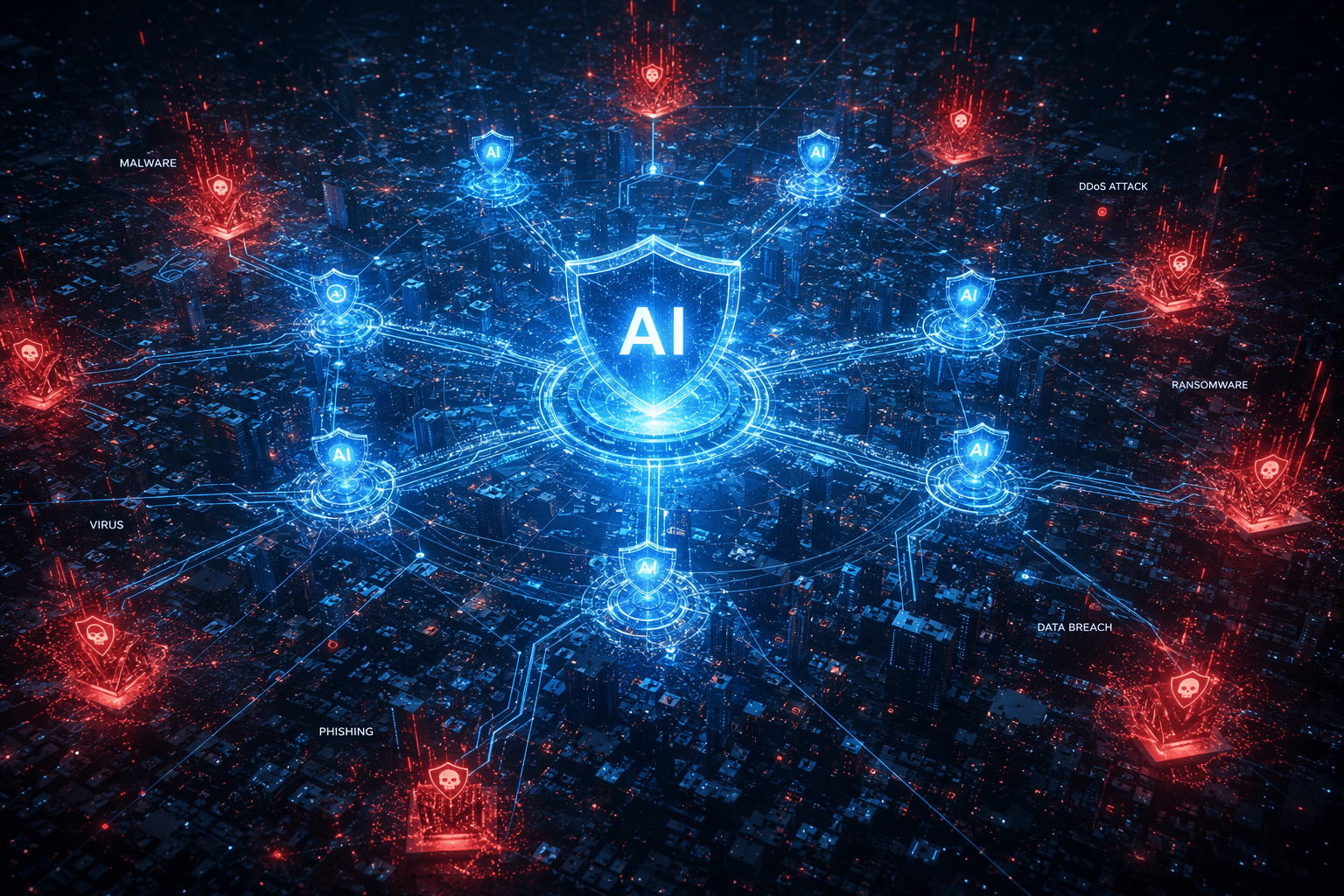
Agentic AI is seriously changing cybersecurity. Instead of only helping a person write an email or suggest code, this form of artificial intelligence can take a goal and carry out many steps on its own. That matters because recon, phishing, and malware activity can now move faster and require far less manual effort. If you run a business, you need to understand what this shift means, what new risks it creates, and how stronger defenses can help you respond.
If you’re looking for practical agentic AI tools, you can find curated directories on technology review websites or specialized platforms focused on AI solutions, such as FutureTools.io or Supertools Directory. These online resources list the latest agentic AI tools and provide details about their cybersecurity applications.
Defining Agentic AI in Modern Cybersecurity
In simple terms, agentic AI is an artificial intelligence system that can pursue a goal with limited supervision. An AI model does not just answer prompts. It can collect information, reason through steps, take action, and adjust based on results.
What makes agentic systems different is their agency. An agentic AI system can use tools, work through multistep tasks, and keep moving without waiting for constant instructions. That is why it stands out in modern cybersecurity.
How Agentic AI Differs from Traditional AI Models
Traditional AI usually reacts to a prompt. It follows defined rules or produces content when asked, then stops. Many AI systems in that older model still depend on regular human intervention to decide what happens next.
Agentic AI works differently. It can break a goal into steps, use external tools, collect fresh information, and act on that information. Large language models may power the reasoning, but the bigger shift is that the system can move from suggestion to execution.
That means human oversight changes rather than disappears. Instead of guiding every click, people may set objectives, approve sensitive actions, and review outcomes. In cyber operations, this difference is huge because the system can handle more of the workflow by itself.
Core Features and Capabilities of Agentic AI
At the center of agentic AI are autonomous agents that can pursue a task with minimal guidance. They are built to handle complex workflows, coordinate steps, and keep progress moving toward a goal.
Some systems rely on specialized agents that divide work across human teams or software layers. Others use generative AI for language and planning, then improve decisions through reinforcement learning and feedback from results.
Common capabilities include:
- Using tools and data to complete multistep tasks
- Coordinating different agents for specific roles
- Adapting actions based on changing conditions
- Learning from feedback loops to improve performance
These features make agentic systems useful for both business operations and cyber activity.
Why Agentic AI Is Reshaping Cyber Defense
Defenders care about agentic AI because attackers can now automate complex tasks that used to take time and skill. An agentic AI system can gather information, test options, and adapt in real time. That shortens the gap between planning and action.
For businesses, the same idea explains why these AI systems attract interest. They can streamline business processes, handle repetitive steps, and reduce manual workload. In security, though, those gains can be turned against you.
This is why cyber defense is being reshaped so quickly. Entry-level attackers gain capability, while experienced operators gain speed. If your security program still assumes slow, manual attacks, it may miss the kind of pressure that agentic tools now create.
How Agentic AI Automates Reconnaissance
Recon is one of the clearest use cases for agentic AI. An attacker can assign a system to perform automated data collection across many public channels, then organize the findings into a useful picture of the target.
That changes recon from a slow manual task into a repeatable process. With target profiling, the system can build context around people, systems, and likely weak points. The next sections show how this happens in practice.
Automated Data Collection and Target Profiling
An AI agent can pull from many data sources without getting tired or losing track. Public profiles, company announcements, conference videos, and similar material can all feed target profiling. What once took hours can now happen much faster.
The big shift is coordination. The system can use external tools, collect details, sort them by relevance, and hand that material to another agent for the next step. This makes recon feel less like isolated research and more like a connected workflow.
Typical collection targets may include:
- Professional profiles and role details
- Press releases and public statements
- Recorded talks or conference appearances
- Technical clues tied to exposed services
For a business, that means even ordinary public information can become useful intelligence in the wrong hands.
Analyzing Publicly Available Information at Scale
Once the data is gathered, AI systems can sort through public information at a scale people rarely can. They can compare job roles, track wording, note changes over time, and flag items that may support a later attack.
This matters because data sources are everywhere. Social platforms, company sites, documents, and recordings can all be reviewed together. In real time, the system can add new findings and keep the profile current rather than static.
That same speed is often praised for business process efficiency in normal operations. In a threat context, though, it gives attackers a clearer picture faster. The result is better timing, better context, and fewer obvious mistakes during the next phase.
Advanced Social Engineering Tactics Empowered by AI
Social engineering becomes more dangerous when AI systems can study user behavior and turn that knowledge into convincing outreach. Instead of sending one generic lure to thousands of people, the system can shape messages around each target.
A profile built from social media, public appearances, and business details gives the attacker a strong base for content creation. The language can match the target’s role, interests, or recent activity. That removes many of the old phishing clues people were taught to spot.
The same idea can extend beyond email. It can support ongoing chats and even phone calls using generated language or voice-based tools. That is a major difference from older tools, which usually needed much more direct human control at every step.
Agentic AI’s Role in Phishing Campaigns
Phishing is where many people first notice the impact of agentic AI. These systems can create personalized messages, send them at scale, and keep the conversation going through automation. That makes attacks look more natural and much harder to dismiss.
Machine learning also helps refine tone, timing, and follow-up behavior. Industries with valuable records, money flows, or sensitive communications are especially exposed. Next, let’s look at how these campaigns are built and why older filters face more pressure.
Crafting Personalized Phishing Messages Without Human Intervention
Personalized phishing used to require time. Someone had to research the target, write a message, and adjust it after every reply. Now an AI model can do much of that with automation.
Natural language processing lets the system produce messages that feel fluent and specific. If it knows a person’s role, employer, or recent public activity, it can shape a message that sounds relevant instead of random. It can even continue the exchange, answer questions, and guide the target forward.
This looks similar to customer service automation on the surface, which is why it can feel believable. A system that handles support-style conversations for good can also be copied for abuse. The danger is not just speed. It is credibility built without human intervention.
Detecting and Bypassing Traditional Email Security Filters
Older email security often relied on common warning signs. Reused wording, awkward grammar, and obvious formatting mistakes helped traditional systems flag suspicious mail. Agentic tools weaken those clues by producing cleaner and more individualized messages.
An AI agent can also test what gets delivered, note what fails, and adjust future attempts. That does not mean defenses are useless. Sender reputation, authentication, and related controls still matter. Still, the pressure on those layers keeps growing as content-based clues fade.
| Security Layer | Pressure From Agentic Attacks |
|---|---|
| Content inspection | Fluent language reduces obvious red flags |
| Pattern matching | Unique messages reduce repeated templates |
| User trust signals | Contextual detail makes fraud seem familiar |
| Access protection | Successful lures can lead to unauthorized access |
So yes, current anti-phishing and anti-malware tools can be challenged by smart evasion, especially if defenses depend too heavily on old content signals.
Simulating Human Behavior for Credible Attacks
What makes agentic AI unique is not just that it writes well. It can simulate parts of user behavior over time. An AI agent can pause, reply, clarify, and keep a thread moving in a way that feels more human.
Generative AI supports the language, but the larger effect comes from coordination and timing. The system can react in real time, shift tone, and continue the interaction without waiting for a person to step in. That lowers the amount of human involvement needed behind the scenes.
For a target, the exchange can feel ordinary. It may resemble a coworker, vendor, or service contact having a normal conversation. That realism makes the attack more credible and increases the chance that a bad request will be trusted.
Malware Deployment and Distribution Through Agentic AI
Agentic AI also affects malware. An AI model can support selection, delivery, and adjustment of malicious code, while autonomous agents handle parts of the workflow that once required steady operator attention.
The risk is not only more malware. It is malware tied to faster decisions and cleaner execution. At the same time, these systems still carry challenges, including bad judgment and false conclusions. That balance matters as we look at delivery, evasion, and real-time change.
Autonomous Delivery Mechanisms for Malware
Malware delivery can become more automated when agentic AI is connected to other stages of an operation. After recon and phishing, autonomous agents can move a target toward a malicious file, link, or action with far less direct supervision.
The key point is sequencing. One part of the system gathers context, another handles contact, and another prepares the next step. If external systems are available, the workflow can respond to success or failure and continue in real time.
This does not mean the machine always knows the right answer. It can still misjudge a target or recommend the wrong path. Even so, the ability to carry out so many linked steps makes malware campaigns faster, broader, and easier for low-skill actors to launch.
Smart Evasion Tactics Against Antivirus Solutions
One troubling development is the use of agents to rewrite or adjust malware, so it is less visible to antivirus controls. Instead of keeping one fixed version, AI systems can keep changing details to avoid known signatures.
An AI agent can use feedback loops to note which version is blocked and which one gets through. That supports smart evasion, where the code is modified based on outcomes rather than simple guesswork. It is a practical example of how agentic behavior increases speed.
This does not mean antivirus has no value. It still plays an important role in layered defense. The issue is that static protection alone is under more stress when attackers can adapt the malware form instead of reusing the same sample again and again.
Dynamic Adaptation in Real-Time Cyber Attacks
Cyber attacks do not happen in stable settings. Networks change, defenses respond, and targets act differently than expected. In dynamic environments, agentic AI stands out because it can keep adjusting rather than freezing at the first problem.
That matters for real-time operations. AI systems can update choices based on new information, route around blocks, and continue process automation across several stages. Older attack methods often broke when one part failed. These systems are better at recovering and trying a different path.
Going forward, this suggests more flexible and persistent threats. As models improve at tool use, reasoning, and error correction, complex processes will likely become easier to automate. Defenders should expect faster adaptation, not just faster message writing.
Real-World Examples of Agentic AI in Threat Operations
There are already clear use cases that show where agentic AI fits in threat operations. Public examples include autonomous social engineering, AI-supported vulnerability matching, and malware rewriting aimed at slipping past existing controls.
At the same time, many of the same capabilities are presented as business benefits in normal artificial intelligence settings. That is what makes this technology so important. The next examples show how the same strengths can support very different outcomes.
Documented Cases of AI-Driven Recon and Intrusion
One documented pattern is autonomous social engineering tied to recon. An AI agent collects public data, builds a profile, and feeds another system that starts the conversation. That can support the path toward intrusion without the constant hand of an operator.
Another pattern involves pairing AI systems with vulnerability information. The system reviews likely exposures, matches them to known weaknesses, and suggests what may work based on observed indicators. That can move an operation much closer to unauthorized access.
Examples discussed in current threat thinking include:
- Public recon that feeds personalized outreach
- Vulnerability matching based on exposed indicators
- Multi-step targeting with separate agents for each phase
- Monitoring enterprise or supply chain management clues for timing
These are not just theories. They reflect how agentic workflows are already being described and tested.
Notable Phishing Incidents Enabled by Automation
The most notable phishing shift is not one single incident. It is the growing pattern of attacks that use automation to remove the obvious flaws people once noticed right away. Messages are cleaner, more specific, and better timed.
An AI agent can manage a conversation from first contact through follow-up. That means phishing now borrows the structure of ordinary business processes. It can resemble outreach from finance, operations, or customer support, which lowers suspicion.
For organizations, the lesson is clear. You can no longer rely on spotting poor grammar or recycled templates. Phishing enabled by automation is closer to a guided interaction than a one-time lure, and that makes continuous verification far more important than intuition alone.
Lessons Learned from AI-Orchestrated Malware Campaigns
AI-orchestrated malware campaigns teach a simple lesson: speed changes everything. When AI systems can rewrite code, test results, and adjust direction quickly, defenders have less time to notice and respond.
They also show why incident response must improve. Human teams need visibility into what changed, how the malware evolved, and where the attack adapted. Without that, a campaign can move ahead while defenders are still investigating the first stage.
Another key lesson is that feedback loops help both sides. Attackers use them to improve delivery and evasion. Defenders should use them to strengthen controls, tune detection, and refine response plans after every event. Fast learning is no longer optional in modern defense.
Protecting Your Organization Against Agentic AI Threats
Protection starts with accepting the shift. Agentic AI creates faster attacks, better personalization, and more automation across the full attack chain. It also carries risks such as overconfidence, bad judgment, and hidden errors.
That means your defense should combine strong detection and response with human oversight. Security controls, staff awareness, and clear business processes all matter. The next sections explain what that looks like and how Vision Computer Solutions can help.
Advanced Detection and Response Solutions
Strong detection needs to focus on more than message wording. Because agentic attacks can remove old language clues, you need visibility across identity, behavior, authentication, and unusual system activity. That helps detection stay useful even when the content looks polished.
Response also has to move faster. AI systems can act in real time, so your security team needs workflows that support quick review, containment, and escalation. Slow handoffs leave gaps that smart attackers can exploit.
This is where mature business processes and reliable IT infrastructure make a difference. Logging, alert review, access controls, and incident handling should work together. A defense is only as strong as its ability to see change early and react before one suspicious event becomes a larger breach.
The Role of Vision Computer Solutions in Safeguarding Businesses
Vision Computer Solutions can help your business respond to this new threat landscape by strengthening the basics that agentic attacks try to exploit. That includes improving visibility, tightening workflows, and supporting safer use of AI systems across daily operations.
Just as attackers rely on external tools and connected steps, defenders need coordinated protection. A trusted security partner can help align controls, reduce weak points, and improve business process efficiency so your team is not overwhelmed by scattered systems or slow response.
The business benefits are practical. You get better readiness, clearer processes, and stronger employee training around modern phishing and malware risks. When attacks are more automated, your protection needs to be more coordinated too, and that is where guided support adds real value.
Employee Training and Proactive Security Strategies
Technology alone will not solve this problem. Employee training still matters because many attacks are designed to win trust, not just beat software. When an AI agent can sound natural, your people need to know what to question.
Proactive strategies should help human agents slow down and verify before acting on requests tied to money, credentials, or sensitive information. This is especially important when messages seem personal or urgent.
Useful focus areas include:
- Verifying unusual requests through a second channel
- Limiting exposure of sensitive information in public spaces
- Teaching staff how modern phishing conversations unfold
- Practicing response steps for suspicious emails, links, and calls
Well-trained teams create friction for attackers, and that friction is still one of your best defenses.
Conclusion
In conclusion, the rise of Agentic AI is transforming the landscape of cybersecurity by automating reconnaissance and phishing tactics with unprecedented precision. This technology simplifies complex processes, allowing for targeted attacks that bypass traditional defenses. However, the threat it poses cannot be overlooked. Organizations must prioritize robust security measures and partner with experts like Vision Computer Solutions to implement advanced detection and response strategies. By investing in employee training and proactive security initiatives, businesses can better shield themselves from the evolving dangers of AI-driven cyber threats. For a comprehensive assessment of your security posture, consider reaching out for a consultation today.
Frequently Asked Questions
Can agentic AI evade current anti-phishing and anti-malware systems?
Yes, agentic AI can challenge anti-phishing and anti-malware defenses because AI systems can create unique content, test results, and adjust behavior. This smart evasion weakens older detection methods that depend on repeated templates or obvious errors, which is why layered controls and stronger review processes matter.
Which industries are most at risk from agentic AI-enhanced attacks?
Industries with valuable records and fast-moving operations face the most risk. Financial services and supply chain management stand out because automation, artificial intelligence, and interconnected workflows create more opportunities for abuse. Any organization that handles sensitive data, payments, or trusted communications should treat this threat seriously.
How is agentic AI expected to evolve in cybersecurity threats?
Agentic AI is likely to become more adaptive in dynamic environments. As an AI agent improves at tool use, reasoning, and error correction, attacks may adjust in real time instead of failing after one blocked step. Large language models will support this shift by making those interactions more natural and persistent.

Zak McGraw, Digital Marketing Manager at Vision Computer Solutions in the Detroit Metro Area, shares tips on MSP services, cybersecurity, and business tech.