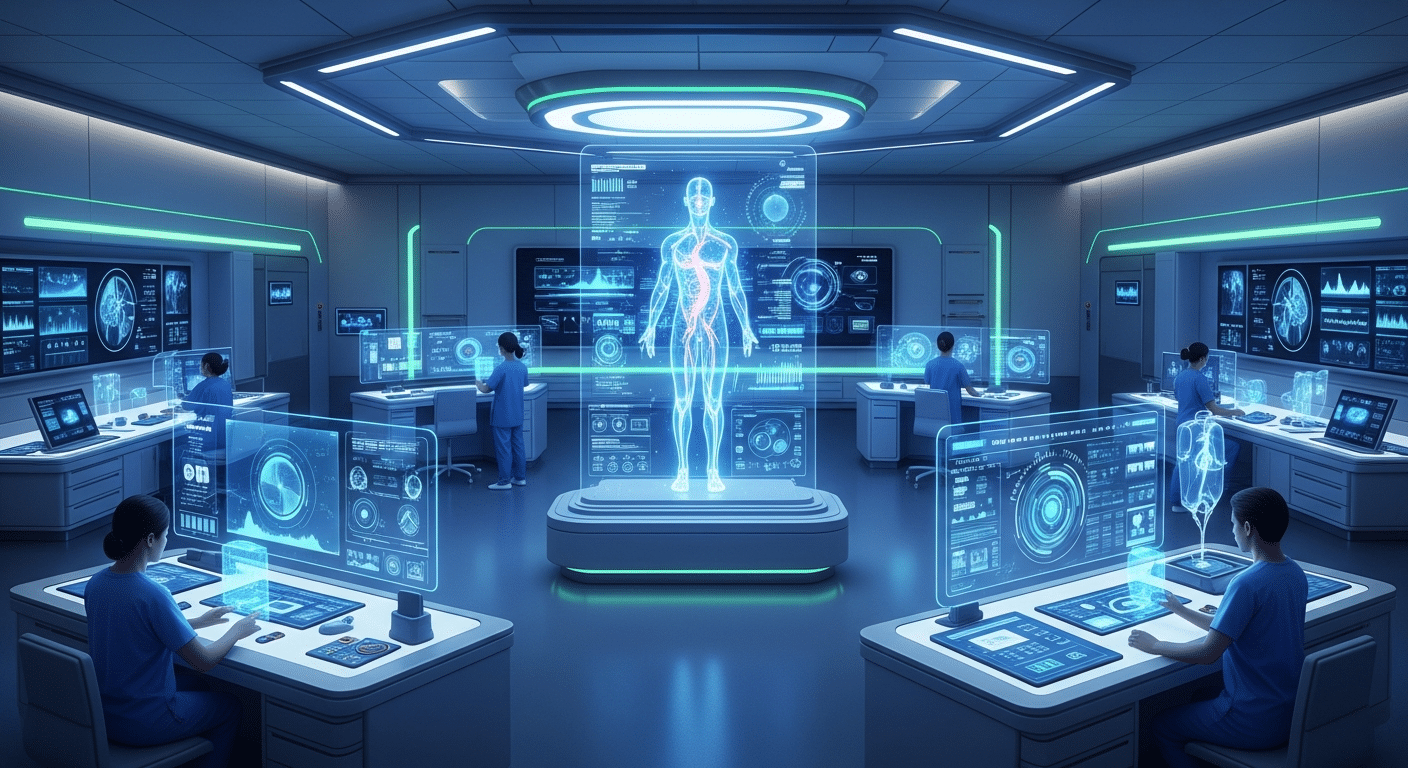
The world of healthcare is undergoing a major transformation, moving away from traditional hardware to smarter, software-driven solutions. At the heart of this change is the concept of the digital twin, a virtual replica of a physical device or system. IT-Driven Simulation is playing a critical role by allowing companies to test, validate, and perfect their engineering designs in a virtual space before ever building a physical prototype. This approach is not just a trend; it’s reshaping how medical devices are created and delivered.
Understanding IT-Driven Simulation for Digital Twins in Healthcare
IT-driven simulation involves using advanced computational power and software to create a virtual model—or digital twin—of a product or process. In the context of engineering simulation, it means leveraging data and algorithms to test how a design will perform under different conditions. This allows teams to explore possibilities without physical constraints.
This emulation process is powered by a suite of sophisticated simulation tools that analyze everything from structural integrity to fluid dynamics. By integrating these tools early in the development cycle, healthcare companies can gain deep insights into their designs, leading to more innovative and reliable products. Up next, we’ll explore its specific role and the industry’s shift toward software-defined devices.
Defining IT-Driven Simulation and Its Role in Modern Healthcare
So, what does IT-driven simulation mean for engineering and design? It’s an approach that uses computational modeling to predict how a product will behave in the real world. Instead of building and breaking physical models, engineers create a digital twin to run countless tests. This virtual testing ground allows for rapid iteration and refinement, ensuring a higher level of product quality from the start.
In modern healthcare, this technology is a game-changer. It enables the development of personalized medicine by simulating how a specific patient might react to a treatment or a medical device. For instance, a digital twin of a patient’s heart can help surgeons plan complex procedures with greater precision. This emulation process provides a risk-free environment to explore innovative solutions that were previously too complex or costly to test.
Ultimately, the role of IT-driven simulation is to make the development process smarter, faster, and more efficient. It provides the data-backed insights needed to optimize designs, ensure safety, and accelerate the delivery of life-saving technologies to patients who need them most.
The Shift from Hardware-Centric to Software-Defined Devices
The medical device industry is experiencing a fundamental shift. Traditionally, development focused on standalone, hardware-centric devices with fixed functions. Today, the move is toward connected, intelligent, and software-defined devices. This transition allows for continuous updates, new applications, and recurring revenue models, moving beyond a one-time hardware sale.
This change is driven by the scalability of software. While hardware is hard to change once built, software can be iteratively improved and updated over the air. This flexibility opens the door for significant product innovation. Industries like automotive and aerospace have effectively used IT-driven simulation for years, and now healthcare is catching up. Examples of this shift in MedTech include:
- Wearable devices with embedded AI that transmit real-time patient data.
- Advanced imaging systems using machine learning for better diagnostics.
- Surgical devices incorporating adaptive algorithms for enhanced precision.
The use of powerful simulation tools makes this transition possible. They allow developers to refine the software components of a device within a virtual environment, perfecting the user experience and functionality throughout the design process.
Key Benefits of IT-Driven Simulation in Medical Device Development
Adopting IT-driven simulation offers immense advantages for medical device development. The primary benefit is the ability for design engineers to test and validate ideas virtually, which significantly reduces the reliance on expensive and time-consuming physical prototypes. This accelerates the entire product design and development timeline.
Using emulation software also leads to better, more reliable products. By running countless “what-if” scenarios, engineers can identify potential flaws and optimize performance early in the process. This data-driven approach ensures that the final product is not only innovative but also safe and effective. The following sections will detail how this enhances performance and saves costs.
Enhancing Product Design Performance and Efficiency
IT-driven simulation dramatically improves product design performance by enabling engineers to conduct deep analysis that isn’t possible with traditional methods. By using advanced design tools, teams can simulate how a medical device will interact with the human body or perform under extreme conditions. This allows for optimization with greater precision, ensuring the final product meets and exceeds performance benchmarks.
Furthermore, this approach boosts efficiency by streamlining the design workflow. Instead of a linear process where testing happens at the end, emulation is integrated from the very beginning. This “shift-left” approach means potential issues are caught and fixed early, preventing costly rework later. Engineers can explore more design variations in less time, leading to more innovative solutions.
The ability to make informed decisions based on concrete data is another key advantage. Simulation provides detailed insights into everything from material stress to thermal efficiency. This empowers engineers to refine every aspect of the product design, resulting in a higher-quality device that is both effective and reliable.
Accelerating Time-to-Market and Reducing Costs
One of the most significant benefits of IT-driven simulation is its impact on your bottom line and schedule. By moving testing into the virtual world, you can drastically cut down on the need for physical prototypes. Building and testing these prototypes is a major driver of development costs and can add months or even years to a project timeline.
With simulation, you can validate designs quickly and efficiently. The emulation results provide immediate feedback, allowing your team to iterate and optimize without the delays of traditional manufacturing and testing cycles. This rapid feedback loop directly accelerates time-to-market, giving you a competitive edge. The main ways simulation achieves this are by:
- Reducing the number of costly physical prototypes required.
- Identifying and resolving design flaws early in the development cycle.
- Automating testing for a wide range of operational scenarios.
Ultimately, this means you can bring a higher-quality product to market faster and with a smaller budget. By minimizing rework and streamlining validation, simulation ensures that your resources are used effectively, transforming the economics of medical device development.
Essential Technologies Powering IT-Driven Simulation for Digital Twins
Creating a sophisticated digital twin relies on a combination of powerful technologies. At the core are advanced simulation tools and software that can model complex systems with incredible accuracy. These platforms allow engineers to create a virtual replica of a medical device and test its behavior under countless scenarios during the development process.
More recently, the integration of artificial intelligence and machine learning has taken emulation to the next level. AI models can analyze vast amounts of simulation data to identify patterns, predict outcomes, and suggest optimizations that a human engineer might miss. This synergy between AI and emulation is what makes the modern digital twin so powerful. We’ll now look at how AI is integrated and the leading tools used.
Integrating AI and Data-Driven Modeling in Healthcare Simulations
Artificial intelligence is becoming a cornerstone of modern healthcare simulations. AI models are integrated into the simulation process to enhance predictive accuracy and automate complex analyses. For example, machine learning algorithms can be trained on past emulation data to forecast how a new design will perform, significantly speeding up the optimization process. This is the essence of data-driven modeling, where historical and simulated data inform future predictions.
The relationship between data-driven modeling and IT-driven simulation is symbiotic. Emulation generates massive amounts of data, and data-driven AI models use that information to create faster, more accurate predictive tools. This creates a powerful feedback loop. Key integrations of AI include:
- AI-enhanced diagnostics that can detect anomalies in real time.
- Predictive maintenance models for connected devices.
- Automated test generation based on system requirements and risk levels.
By leveraging artificial intelligence, healthcare companies can move beyond simple verification. They can build self-learning systems that continuously improve, creating digital twins that become more accurate and insightful over time. This leads to more robust device designs and better patient outcomes.
Leading Simulation Tools and Software Used in the United States
A variety of powerful emulation tools are available to support engineering simulation in the healthcare industry. These software platforms offer specialized capabilities for different types of analysis, from structural mechanics to fluid dynamics. Choosing the right tool is crucial for integrating emulation effectively into your design workflows. Companies like Autodesk offer comprehensive solutions that combine design and emulation in one platform.
Autodesk provides a suite of tools that are widely used in the United States. These solutions are known for their robust capabilities and seamless integration with CAD software, which helps streamline the entire product development process. They empower engineers to perform detailed analyses directly within their design environment.
For those looking to adopt IT-driven simulation, here are some of the key solutions available. These platforms provide the foundation for building accurate digital twins and accelerating innovation.
| Tool/Platform | Key Capabilities |
|---|---|
| Autodesk Fusion | An integrated platform combining CAD, CAM, and CAE for structural, thermal, and motion analysis. |
| Autodesk Inventor | Professional-grade 3D CAD software with integrated simulation for motion and stress analysis. |
| Autodesk Nastran | Advanced FEA solver for linear and nonlinear stress, dynamics, and heat transfer analysis. |
Overcoming Challenges in Adopting IT-Driven Simulation
While the benefits are clear, adopting an IT-driven simulation process is not without its challenges. Organizations often face hurdles related to security, regulatory compliance, and integrating new technologies with existing systems. Making significant design changes based on emulation requires trust in the data and a culture that embraces virtual testing.
Additionally, there can be a skills gap. Not all teams have a dedicated simulation specialist group, and implementing these advanced tools requires expertise. Successfully navigating these obstacles is key to unlocking the full potential of simulation and bringing innovative products to market. The following sections will discuss these barriers and how to overcome them.
Addressing Security, Compliance, and Integration Barriers
When implementing digital twins, organizations face significant challenges around security, compliance, and integration. Connected medical devices are potential targets for cyberattacks, making robust security a top priority. Protecting patient data and ensuring device integrity requires a “cybersecurity-by-design” approach that is built into the development process from the start, not added as an afterthought.
Compliance is another major hurdle. The healthcare industry is heavily regulated, with strict standards like HIPAA and FDA guidelines. Demonstrating that your simulation technology and processes meet these requirements is essential. This often involves extensive documentation and validation, which can clash with agile development methods. Key barriers include:
- Ensuring compliance with data privacy regulations like HIPAA and GDPR.
- Validating software changes without invalidating device certification.
- Managing security patches for devices with long lifecycles.
Finally, integration barriers can slow adoption. Many companies use fragmented toolsets for different teams, making it difficult to create a seamless workflow. Overcoming these challenges requires a holistic strategy that aligns technology, processes, and people to ensure a smooth and secure development process.
How Startups and Small Businesses Can Leverage Simulation-Driven Innovation
IT-driven simulation is not just for large corporations. Startups and small businesses can gain a significant competitive advantage by leveraging these powerful tools. For smaller companies with limited budgets, the cost savings from reducing physical prototypes can be a game-changer. It allows them to compete with larger players by bringing innovative products to market faster and more affordably.
These organizations can use simulation to de-risk their innovation efforts. Before investing heavily in manufacturing, they can use simulation results to validate their concepts and demonstrate feasibility to investors. This data-driven approach builds confidence and helps secure the funding needed to grow. Cloud-based simulation software also makes these tools more accessible than ever, offering flexible subscription models that fit a startup’s budget.
By embracing simulation, startups and small businesses can punch above their weight. They can explore bold ideas, optimize designs for performance and cost, and accelerate their path from concept to commercialization. This technology democratizes innovation, giving smaller teams the power to develop breakthrough medical solutions.
Conclusion
In conclusion, embracing IT-driven simulation for digital twins in healthcare marks a significant step towards improving efficiency and innovation in medical device development. By transitioning from hardware-centric models to software-defined solutions, businesses can enhance product design performance, accelerate time-to-market, and reduce costs. The integration of cutting-edge technologies like AI further amplifies the potential of these simulations, paving the way for a future where healthcare is not only more effective but also more sustainable. As you explore these advancements, consider how Vision Computer Solutions can assist your business in navigating this transformative landscape. Don’t hesitate to reach out for guidance tailored to your needs.
Frequently Asked Questions
How does IT-driven simulation contribute to sustainability in healthcare engineering?
IT-driven simulation promotes sustainability by reducing the need for physical prototypes, which minimizes material waste and energy consumption. The emulation process uses simulation data to optimize the engineering design for efficiency, leading to a more streamlined and environmentally friendly development process from start to finish.
What are the most common challenges organizations face when implementing digital twins and simulation software?
The most common challenges include ensuring data security, navigating strict regulatory compliance, and overcoming integration barriers with existing systems. Organizations also struggle with the high initial cost of simulation tools, a potential skills gap in their teams, and cultural resistance to changing the traditional design process.
What services does Vision Computer Solutions offer for businesses adopting IT-driven simulation?
Vision Computer Solutions helps businesses by providing expert guidance on selecting and implementing the right emulation software. Our simulation experts work with you to integrate these tools into your engineering design and product development process, enabling you to create innovative products more efficiently and with greater confidence.

Tim has worked in the Metro Detroit Area’s IT since 2010, starting as a field technician for major corporations before advancing into engineering and running his own IT business. With extensive SMB experience, he helps organizations bridge the gap to enterprise technology and scale with confidence.