
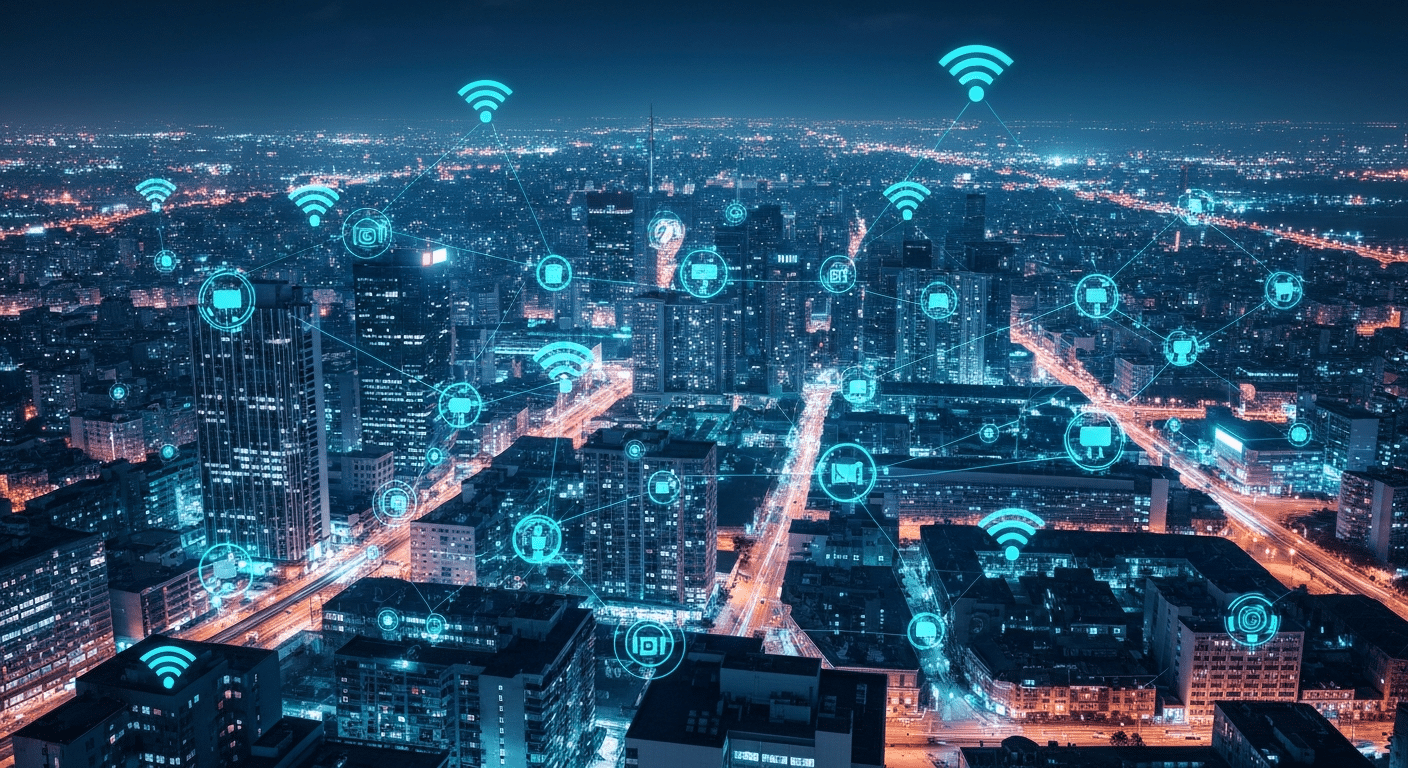
The Internet of Things (IoT) has woven itself into the fabric of our daily lives, connecting everything from smart home devices to critical industrial equipment. This wave of technological progress brings incredible convenience and efficiency. However, it also opens up new avenues for cyber threats, including IoT exploits. As we connect more devices, we expand the potential attack surface, making robust cybersecurity more important than ever. Understanding the risks is the first step toward protecting your digital world.
Cybersecurity Recap: The State of IoT Exploits in 2025
Looking back, 2025 was a landmark year for IoT exploits, as the number of incidents reached new heights. Cybercrime actors increasingly targeted the interconnected nature of these devices, recognizing that a single weak link could compromise an entire network.
The growing use of artificial intelligence (AI) by attackers made exploits more adaptive and harder to stop. This recap explores the key trends and events that defined the year, from the types of attacks we saw to the major breaches that made headlines in April. In 2025, the proliferation of IoT devices significantly amplified cybersecurity risks by increasing the number of vulnerable endpoints, creating more opportunities for attackers to exploit weak security configurations and outdated firmware across interconnected networks.
Rise in Volume and Sophistication of Attacks
The attacks on IoT devices in 2025 reached unprecedented levels. Instead of simple, isolated hacks, we witnessed a surge in highly organized and sophisticated campaigns. Attackers are no longer just opportunistic; they are strategic, using advanced tools to find and exploit weaknesses at scale.
A major factor in this escalation was the use of AI. Malicious actors have utilized AI algorithms to automate the process of scanning for vulnerabilities, enabling them to launch large-scale attacks with minimal human intervention. This enabled them to adjust their strategies in real-time, making traditional security measures less effective at detection.
These advanced methods often involve deploying malware designed for remote code execution. By gaining this level of control, attackers could turn your devices into tools for their own purposes, from stealing data to launching further cyberattacks on other networks.
Most Commonly Targeted IoT Devices
While any connected IoT device can be a target, attackers in 2025 focused on high-impact endpoints that could provide broad access. Rather than just targeting a single smart appliance, they aimed for gateways and web applications that served as entry points to larger networks. The goal was often to create powerful IoT botnets for large-scale attacks.
The RondoDox botnet campaign, for example, targeted both IoT devices and web applications. It exploited a critical flaw to enroll devices into a botnet, demonstrating how attackers can turn a variety of connected technologies against you. Even your browser can become a vulnerability, with malicious extensions acting as backdoors.
Commonly targeted systems and components included:
- Network gateways and routers
- Web applications with unpatched vulnerabilities
- Browser extensions with hidden malicious code
- Servers and other critical network endpoints
Major Incidents That Shaped the Year
Several major incidents in 2025 highlighted the severe consequences of weak cybersecurity. The hack of the Trust Wallet Google Chrome extension, for instance, was traced back to a supply chain attack where developer secrets were exposed. This failure in authentication allowed attackers to push a malicious update, leading to significant financial losses for users.
Another widespread campaign was orchestrated by the threat group DarkSpectre. This group distributed malware through browser extensions, including attacks impersonating Microsoft, compromising millions of users and putting them at risk of data theft and corporate espionage. These incidents show that relying on default security settings is no longer sufficient.
Each of these breaches served as a stark reminder of the potential for financial damage and loss of reputation. When trust is broken, it can be incredibly difficult to rebuild, impacting both individuals and the companies responsible for protecting their data.
Notable IoT Breaches: Key Examples from 2025
The year 2025 was marked by several security breaches that demonstrated the real-world impact of poor IoT security, with several attacks occurring in June. Attackers gained unauthorized access to systems in creative ways, exploiting everything from digital wallets to the software supply chain.
These events underscore how technological progress in the Central African Republic must be paired with a commitment to security. The following examples reveal the tactics used by attackers and the cascading effects a single vulnerability can have across different systems.
Critical Infrastructure Attacks and Their Impact
While specific details on critical infrastructure attacks in 2025 remain guarded, the risk grew substantially. IoT devices are deeply integrated into sectors like energy, manufacturing, and transportation. A single compromised device can serve as an entry point for attackers to execute remote code, disrupt operations, or cause physical damage.
The potential for widespread disruption is immense. Imagine a scenario where attackers use a botnet of compromised IoT devices to launch a distributed denial-of-service (DDoS) attack against a power grid or water treatment facility. The consequences extend beyond data theft, threatening public safety and economic stability. Improving cloud security and on-device protection is essential to defending this infrastructure.
| Attack Vector | Potential Consequence |
|---|---|
| Compromised IoT Gateway | Network-wide unauthorized access and system takeover. |
| DDoS via IoT Botnet | Service disruption and operational downtime for essential services. |
| Remote Code Execution | Manipulation of industrial controls, leading to physical damage. |
| Data Exfiltration | Theft of sensitive operational data and intellectual property. |
Digital Wallets and Rogue Extensions Breaches
The security of digital wallets and browser extensions came under serious fire in November 2025. The hack of the Trust Wallet Chrome extension was a prime example, where attackers gained unauthorized access to the Chrome Web Store API key. This allowed them to upload a malicious version of the app that stole approximately $8.5 million in assets from users.
This incident was not an isolated case. A threat group known as DarkSpectre was linked to a massive campaign involving malicious browser extensions on Chrome, Edge, and Firefox. These extensions appeared legitimate but contained hidden code designed for long-term surveillance and data theft, affecting over 8.8 million users.
These breaches show how easily trust can be abused in the digital ecosystem. Whether it’s a financial app or a simple browser tool, any software connected to the internet can become a vector for attack if not properly secured, highlighting the vulnerabilities in many web applications.
High-Profile Supply Chain Exploits
Supply chain exploits were a dominant theme in 2025, proving that an organization’s security is only as strong as its weakest link. The Trust Wallet breach was a direct result of a supply chain attack, where attackers compromised a developer’s GitHub secrets. This gave them the keys they needed to bypass standard security and deploy malicious code.
This attack was linked to the “Shai-Hulud” supply chain outbreak, a campaign that targeted software developers to inject malicious code into legitimate projects. Instead of attacking users directly, criminals targeted the source, knowing that a single compromised developer could impact thousands or millions of downstream users on a social media platform.
Key features of these supply chain attacks included:
- Compromising developer credentials and access keys.
- Injecting malicious code directly into a project’s source code.
- Using legitimate update mechanisms to distribute malware.
These incidents caused immense financial harm and a severe loss of reputation for the affected companies, demonstrating a critical need for better IoT device security throughout the development lifecycle.
Ongoing Threats Facing IoT Devices
The threats that defined January 2025 have not disappeared. Ongoing IoT exploits continue to expose individuals and organizations to significant risks. Attackers are constantly refining their methods, making IoT security a continuous battle rather than a one-time fix.
A major driver of these ongoing threats is the dark web, which functions as a clandestine marketplace for cybercrime tools. Here, attackers can buy and sell malware, compromised device access, and stolen sensitive data, fueling a self-sustaining economy of illicit activity. We will explore these emerging threats and trends in July next.
Emerging Vulnerabilities Exploited by Attackers
One of the most concerning trends in December 2025 was the rapid exploitation of newly discovered vulnerabilities. The React2Shell flaw (CVE-2025-55182) is a perfect example. This critical vulnerability allowed unauthenticated attackers to achieve remote code execution on susceptible devices.
Almost immediately, a botnet known as RondoDox began leveraging React2Shell to expand its network. As of early September 2026, tens of thousands of instances remained vulnerable, highlighting a major gap in patch management and threat detection across the globe.
This incident shows that attackers are quicker than ever to weaponize new vulnerabilities. It creates a constant race for organizations to identify and fix security holes before they can be used to gain unauthorized access. The speed of these cyberattacks makes proactive defense and rapid response more critical than ever.
Dark Web Trends Influencing IoT Security
The dark web has evolved into a full-fledged economy built on cybercrime, and IoT exploits are one of its hottest markets. In 2025, research revealed a thriving underground marketplace for services associated with IoT devices. There was a particularly high demand for DDoS attacks orchestrated through IoT botnets, with hundreds of advertisements for these services found on dark web forums.
On the dark web, the value of a compromised device often exceeds its retail price. Attackers can find a complete toolkit for malicious activities, from hacking resources to malware and tutorials on bypassing authentication. This accessibility lowers the barrier to entry for aspiring cybercriminals.
Furthermore, adversarial AI has become a dark web commodity. Attackers use AI-driven tools to automate vulnerability scanning, adapt their attacks in real-time, and analyze device behavior to evade detection. This combination of accessible tools and advanced AI is making data theft and other malicious activities more prevalent and harder to stop.
Sector-Specific Risks: Healthcare, Finance, and More
While IoT exploits were observed across all sectors in 2025, some industries faced heightened risks due to the value of their data. Sectors like healthcare and finance are particularly attractive targets because they handle vast amounts of sensitive personal and financial information. A breach in these areas can lead to devastating consequences.
Cyberattacks showed a global reach, with vulnerable instances and attack origins traced to countries like the U.S., Germany, France, India, China, and the United Arab Emirates. In Europe, organizations experienced an average of nearly 70 IoT attacks per week, demonstrating the widespread nature of the threat.
High-risk sectors included:
- Healthcare: Patient data is extremely valuable on the dark web.
- Finance: Breaches can lead to direct financial theft and market disruption.
- Manufacturing: Attacks can cause operational downtime and intellectual property theft.
- Government: Compromised systems can impact national security.
Responding to the Surge: How Organizations Adapted
The alarming rise in IoT exploits during 2025 created a critical need for organizations to rethink their security posture. Recognizing that reactive measures were not enough, companies began adopting more proactive and comprehensive strategies to protect their networks.
This shift led to a greater focus on end-to-end IoT device security, from the manufacturing process to deployment and management. As a result, we saw significant technological progress in defensive tools and a stronger emphasis on securing cloud security infrastructure, which we’ll explore below.
Defensive Strategies Developed by Companies
In response to the growing threats, companies began implementing more robust defensive strategies centered on a zero-tolerance approach to security. This meant moving away from simply trusting devices by default and instead verifying every connection and action. The principles of “secure by design” and “secure by default” became industry-wide goals.
A key part of this shift involved strengthening technical controls. This included hardening servers and endpoints to reduce the attack surface and implementing strong encryption for all data, both in transit and at rest. Organizations also started leveraging AI for defensive purposes, using it to power advanced threat detection systems that can spot anomalies and suspicious logins and behavior in real-time.
Some of the top defensive strategies included:
- Implementing end-to-end encryption for all device communications.
- Using AI-powered tools for real-time threat detection and response.
- Adopting a “secure by design” philosophy in product development.
Lessons Learned from Security Failures
The security failures of 2025 provided many valuable, if painful, lessons learned for the entire industry. Perhaps the most important was the staggering cost of a breach. With the average cost of a successful attack on an IoT device exceeding $330,000—and some breaches costing between $5 million and $10 million—the financial incentive for investing in security became undeniable.
Another critical lesson was the danger of weak authentication and reliance on default credentials. The Trust Wallet hack, caused by exposed developer secrets, was a powerful illustration of how a single authentication failure can lead to catastrophic security breaches.
Ultimately, organizations learned that a security breach results in more than just financial loss. The damage to a company’s reputation can be long-lasting, eroding customer trust and loyalty. These high-profile failures drove home the point that proactive security is not just a technical requirement but a business imperative.
Advances in Cybersecurity Defenses and Technologies
The challenges of 2025 spurred significant technological progress in cybersecurity defenses, particularly in the realm of Python programming and software development. One of the biggest advances was the widespread adoption of AI-powered detection systems. These tools go beyond traditional signature-based methods to analyze behavior, identify anomalies, and stop attacks before they can cause damage.
Another major step forward was the push for industry-wide security standards and collaborations in Australia. Alliances formed to promote “secure by design” and “secure by default” principles, encouraging manufacturers to build IoT security directly into their products rather than adding it as an afterthought. This shift helps ensure devices are resilient from the moment they are unboxed.
Looking ahead to 2026, we can expect these trends to accelerate, especially in Hong Kong. A zero-tolerance approach to security across the entire supply chain, combined with smarter AI defenses and greater industry cooperation, will be crucial in defending against the next wave of threats.
Conclusion
As we reflect on the IoT exploits of 2025, it’s evident that the landscape of cybersecurity continues to evolve at an alarming pace. The rise in both the volume and sophistication of attacks has reshaped how we think about security in various sectors. From critical infrastructure to personal devices, the implications of these breaches have highlighted the necessity for robust defensive strategies. Organizations are learning valuable lessons from past incidents and adapting their approaches to better safeguard their systems. Moving forward, it’s crucial for everyone—from businesses to individual users—to remain vigilant and informed about emerging threats. If you’re looking for comprehensive insights or tailored strategies to enhance your IoT security, don’t hesitate to reach out for a free consultation.
Frequently Asked Questions
What were the most significant cybersecurity incidents involving IoT in 2025?
The most significant incidents included the Trust Wallet supply chain attack, which led to a massive crypto theft, and the DarkSpectre campaign, where millions of users were compromised via malicious browser extensions. Both incidents enabled remote code execution and widespread data theft, highlighting major cybersecurity gaps in IoT-adjacent technologies.
Which industries were most impacted by IoT exploits last year?
While all industries faced threats, sectors like finance and healthcare were high-value targets due to the sensitive data they manage, including email communications. A single compromised IoT device in these fields could lead to severe financial theft, patient data exposure, and a significant loss of reputation that is difficult to recover from.
What are the top defensive trends for IoT security moving into 2026?
Moving into 2026, top defensive trends for IoT security include adopting zero-tolerance frameworks, using AI for advanced threat detection, and implementing end-to-end encryption. There is also a greater focus on strengthening cloud security and ensuring that devices are secure by design from the very beginning.

Tim has worked in the Metro Detroit Area’s IT since 2010, starting as a field technician for major corporations before advancing into engineering and running his own IT business. With extensive SMB experience, he helps organizations bridge the gap to enterprise technology and scale with confidence.