
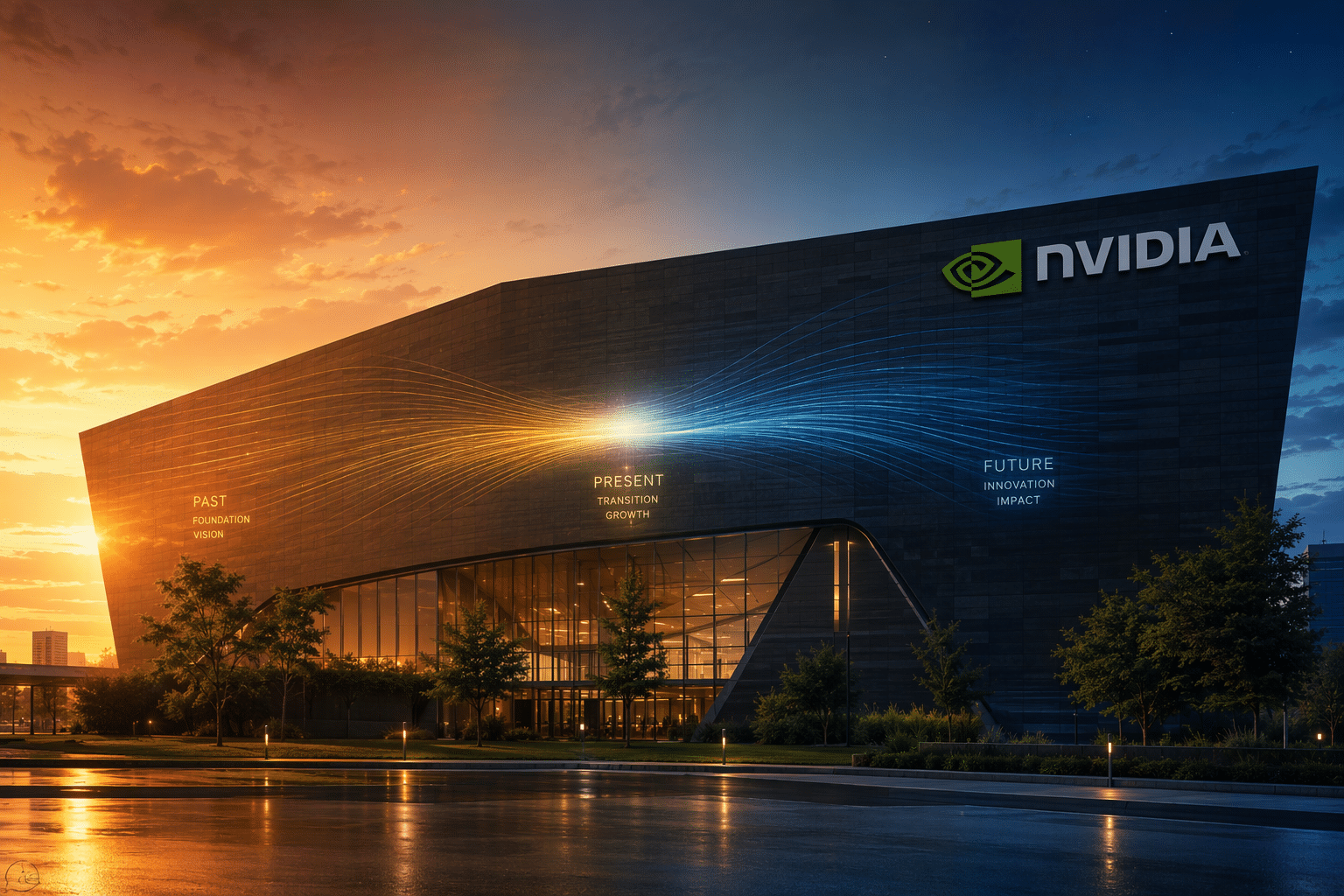
Jensen Huang’s sudden exit marks one of the biggest leadership moments in the company’s history. For years, the NVIDIA CEO role was closely tied to Huang’s public image, strategy, and product direction. Now the board of directors must prove the business can keep moving with steady execution and clear communication. NVIDIA says it can, and the appointment of Colette Kress as interim CEO is the first sign of that plan. The next question is what this shift means in practice.
Reportedly, Jensen Huang has avoided formal succession planning at NVIDIA because he believes that a rigid framework may not suit the company’s dynamic approach to leadership and innovation. Huang has preferred to cultivate talent organically and keep options open, allowing NVIDIA to adapt quickly in a fast-changing tech landscape, rather than publicly committing to a designated successor.
Immediate Impact of Jensen Huang’s Resignation at NVIDIA
Jensen Huang’s resignation creates an immediate leadership change at a company where authority was heavily centered in one person. That matters because Huang shaped strategy, investor messaging, and much of NVIDIA’s public identity. While NVIDIA has not made the full details of its CEO succession plan public, the company has stated in regulatory filings that a succession plan exists and is periodically reviewed by the board, ensuring a process is in place for leadership transitions.
In the short term, the board is trying to reduce disruption by keeping the existing executive leadership structure in place under Colette Kress. Even so, NVIDIA shares may reflect uncertainty as investors assess execution risk, continuity, and market value. The first areas to watch are leadership duties and investor sentiment.
Changes to Executive Leadership Structure
The biggest operational change is clear: Colette Kress has been named interim CEO by the board of directors. She will also remain executive vice president and chief financial officer. That gives NVIDIA an immediate decision-maker without forcing a wider reshuffle on day one.
At the same time, the company is leaning on an experienced leadership team. Harvey C. Jones has been appointed the first-ever Chair of the Board, giving the board of directors a more visible governance anchor during this transition. NVIDIA also said customer commitments, operations, and the product roadmap are expected to continue without interruption.
Still, the executive leadership structure now looks more shared than founder-led. That could help reduce single-person dependence, but it also means more coordination among leaders such as Jay Puri, Debora Shoquist, Tim Teter, and Chris Malachowsky. For NVIDIA, the challenge is simple: keep shipping, keep communicating, and keep authority clear.
Market Reactions and Investor Sentiment
A leadership transition at NVIDIA is never just a management story. It is also a market story. Because Jensen Huang was seen as central to strategy and execution, any abrupt exit can affect investor sentiment quickly.
That does not mean the business suddenly loses its strengths. The technology, customer ties, and leadership bench remain in place. But the market often reacts to uncertainty before it reacts to results. Questions around succession, decision rights, and long-term vision can pressure NVIDIA shares even if near-term operations stay stable.
In practical terms, market value will likely depend on how well NVIDIA shows continuity. Investors will want a calm earnings process, consistent guidance, and signs of performance improvement across existing plans rather than sudden strategic shifts. If Colette Kress and the executive team deliver that message clearly, investor sentiment could stabilize faster than many fear.
NVIDIA’s Leadership Legacy Under Jensen Huang
Jensen Huang leaves behind a rare track record. As chief executive officer since NVIDIA’s founding in 1993, he helped turn the company from a graphics-focused chip maker into a leader in accelerated computing and artificial intelligence.
That long arc of company growth is why his resignation feels so significant. NVIDIA’s rise was tied not only to strong products, but also to Huang’s ability to connect engineering ambition with market opportunity. To understand what changes next, it helps to look at what he built and how he led.
Key Achievements and Milestones
Jensen Huang’s legacy is rooted in major shifts across the semiconductor industry. Under his leadership, NVIDIA invented the GPU in 1999, helped redefine computer graphics, and later became a full-stack computing company. The business then moved from video games into data centers and artificial intelligence at global scale.
Here is a quick view of the milestones tied to Huang’s tenure:
| Milestone | Why It Mattered |
|---|---|
| Co-founded NVIDIA in 1993 | Established the company’s long-term direction |
| Invented the GPU in 1999 | Reshaped graphics and gaming computing |
| Expanded into AI infrastructure | Positioned NVIDIA at the center of artificial intelligence |
| Built full-stack software products and hardware | Strengthened customer lock-in and developer adoption |
Like other founder icons, Huang combined public vision with product conviction. That is why some compare his leadership style to Steve Jobs at Apple. The difference is that Huang’s influence was especially tied to deep technical direction, platform strategy, and execution across AI and accelerated computing.
Influence of Leadership Style on Company Growth
NVIDIA ceo Jensen Huang led with a highly centralized approach. Reports described dozens of executives reporting directly to him at different times. That structure helped the company move quickly across engineering, investor relations, government engagement, and product decisions.
You can see how that leadership style supported company growth. NVIDIA was not just selling chips. It was building a software platform, shaping developer habits, and pushing into artificial intelligence, data science, and large-scale computing. A concentrated leadership model can speed up big bets when one leader has strong technical credibility.
Yet this same model also creates risk when the founder leaves. That is where the comparison to Steve Jobs comes in. Both leaders became closely linked to product vision and brand identity. The key difference now is whether NVIDIA can spread that influence across a broader executive team without losing focus or speed.
NVIDIA CEO Transition: Succession Planning and Potential CEO Candidates
The resignation has put NVIDIA’s CEO succession plan under a bright spotlight. Public reporting before this change often pointed to a limited visible succession structure, even though the NVIDIA board may have had private contingency planning. What is clear now is that the board has acted fast with an interim CEO and a permanent search.
That search will include internal and external candidates. For the board, the issue isn’t just picking NVIDIA’s next CEO. It is deciding whether one person should replace Huang’s broad role or whether leadership should be shared more deliberately.
Internal Contenders: Profiles and Likelihood
Right now, Colette Kress looks like the clearest short-term answer because the board already chose her as interim CEO. She is known to investors, has led finance since 2013, and has been closely involved in NVIDIA’s company growth. That makes her the strongest immediate stabilizer.
Beyond Kress, several internal leaders bring important operating depth. Still, public information shows specialized strength more than founder-style company-wide authority. That is why the permanent process may take time.
- Colette Kress: executive vice president and chief financial officer; now interim CEO and the market’s most familiar internal choice.
- Jay Puri: executive vice president of worldwide field operations, overseeing sales, partner alliances, and business development.
- Debora Shoquist: executive vice president of operations, with deep control over supply chain and manufacturing.
- Tim Teter: general counsel and secretary, important for governance and legal continuity.
- Chris Malachowsky: co-founder and NVIDIA Fellow with a long technical history, though not a clear operating successor.
External Candidates Being Considered
NVIDIA has said it will consider external candidates, but no official shortlist has been released. Public discussion has instead come from analysts and market observers who are asking what kind of outside candidate could lead a company this complex.
The bar is high. An outside candidate would need semiconductor credibility, customer trust, and the ability to manage a global AI platform business from day one. That narrows the field quickly.
- Rene Haas of Arm has been floated as an outside candidate because of his semiconductor background and prior NVIDIA ties.
- Pat Gelsinger has been mentioned as another possible industry veteran.
- Lisa Su of Advanced Micro Devices and Hock Tan have come up in broader speculation, though availability is a major question.
- Tim Cook and Eric Schmidt were also named by one commentator, with Cook’s executive chairman-style stature seen as market-friendly.
- Jay Puri’s earlier experience at Texas Instruments highlights how relevant chip-industry backgrounds are in this search.
Conclusion
In conclusion, Jensen Huang’s resignation marks a significant transition for NVIDIA, ushering in a new era of leadership that could reshuffle the company’s strategic direction. As we’ve explored, the immediate impacts are already resonating through changes in executive structure and market reactions. NVIDIA’s legacy under Huang is undeniably profound, characterized by remarkable achievements and a transformative leadership style. As the company navigates this pivotal moment, the focus will be on the succession planning and potential candidates emerging from both internal and external pools. This transition phase will undoubtedly come with its challenges, but it also presents opportunities for growth and innovation. If you’re looking to stay informed on NVIDIA’s next steps and ongoing developments, feel free to reach out for updates.
Frequently Asked Questions
Does NVIDIA have an official CEO succession plan in place?
NVIDIA did not publicly identify a formal CEO succession plan before this event. What the NVIDIA board has now made clear is its emergency response: Colette Kress is interim CEO, and the executive team will support continuity while the board searches for a permanent chief executive officer.
Is NVIDIA’s CFO considered a likely interim CEO after Jensen Huang?
Yes. Colette Kress was widely seen as a likely interim option, and the board of directors has now appointed her interim CEO. Because she is already chief financial officer and executive vice president, she brings familiarity with investors, operations, and NVIDIA’s broader business position.
What challenges will NVIDIA face during this leadership transition?
The main challenges are clarity and confidence. During this leadership transition, NVIDIA must show that its executive leadership structure can support fast decisions, protect market value, and calm investor sentiment. Its executive team also needs to keep customers, employees, and partners focused on execution rather than uncertainty.

Zak McGraw, Digital Marketing Manager at Vision Computer Solutions in the Detroit Metro Area, shares tips on MSP services, cybersecurity, and business tech.